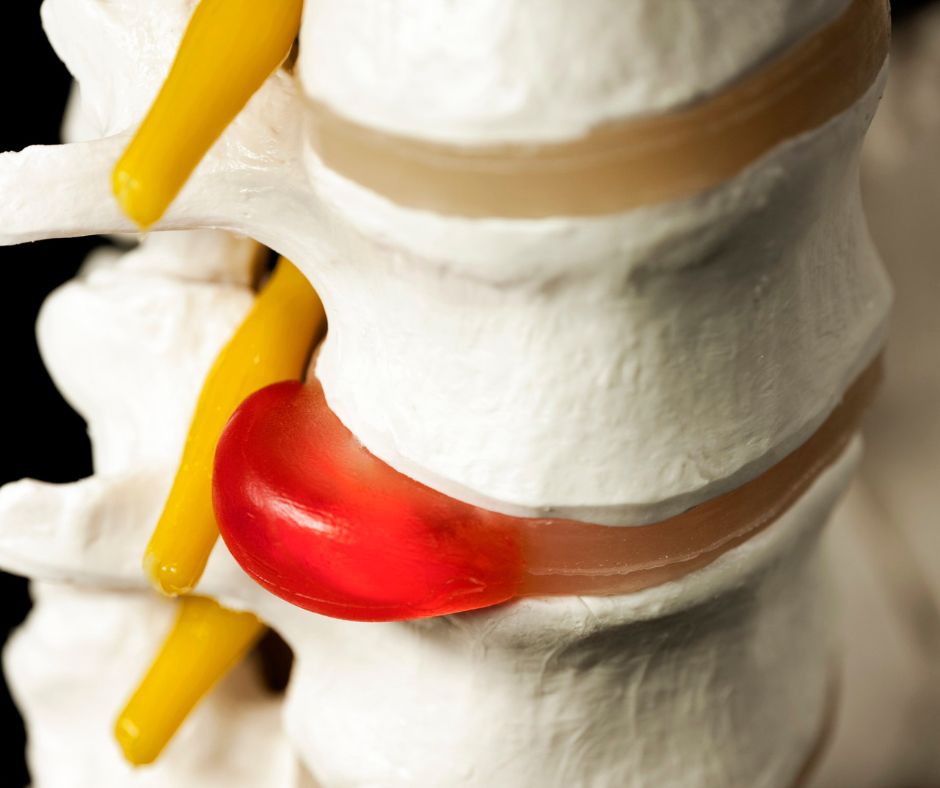
If you’ve been told you have a disc problem—bulging, herniated, or degenerated—you might be wondering if you’re looking at surgery or a lifetime of managing pain. Before you go down that road, there’s something important you need to understand about disc health that most doctors don’t explain.
The Truth About Disc Problems
Let’s start with something that might surprise you: disc problems are incredibly common. By age 50, most people show some degree of disc degeneration on imaging. But here’s the key detail everyone misses—not everyone with disc changes has pain.
Some people walk around with herniated discs and feel nothing. Others have minor bulges and can barely move. The disc damage itself isn’t the whole story.
Your discs are shock absorbers between your vertebrae. They’re engineered to handle enormous loads—but only when your spine is properly aligned and supported. When that support breaks down, everything changes.
What Actually Creates Disc Problems
Here’s what creates disc problems: poor loading over time. When your Postural Chain isn’t working properly, your spine loses its natural curves. Your discs start getting loaded unevenly, and that’s when damage begins.
Think of it like a tire that’s out of alignment. The tread wears unevenly because forces aren’t distributed properly. That’s exactly what happens to your discs when your postural support system breaks down. The wear pattern is predictable once you understand the mechanics.
Poor posture puts excessive pressure on the front of your discs. Day after day, month after month, that uneven pressure builds. Over time, the disc material gets pushed backward—creating bulges, herniations, or degenerative changes that show up on your MRI.
This is where posture therapy for disc problems changes the conversation entirely.
Why Surgery Doesn’t Address the Real Problem
Surgery might remove the disc material that’s pressing on nerves. For some people, that’s necessary and helpful. But here’s what surgery doesn’t do: it doesn’t address why the disc failed in the first place.
If you don’t restore proper loading to your spine, you’re likely to develop problems in adjacent discs. This is why some people end up needing multiple surgeries over time. They fixed the damaged disc but never addressed the underlying loading problem.
The same faulty mechanics that destroyed one disc will eventually destroy the next one. It’s not bad luck. It’s physics.
How Posture Therapy for Disc Problems Takes a Different Approach
Posture therapy for disc problems doesn’t just treat the damaged disc. We restore the support system that protects all your discs.
When we restore function to your Postural Chain—those deep stabilizing muscles that should be working automatically—your spine regains its natural curves. Your discs get loaded evenly again. The excessive pressure that’s been damaging your discs gets eliminated.
Not reduced. Eliminated.
We see remarkable improvements, even in people with significant disc damage showing up on imaging. Their pain decreases not because we “fixed” the disc itself, but because we restored the loading patterns that allow their spine to function the way it’s designed to.
What Happens When Loading Patterns Change
Here’s what’s possible when you change how your spine loads: the constant pressure on damaged discs stops. Your body gets a chance to stabilize and adapt. Pain that you thought was permanent starts backing off.
Many clients avoid surgery entirely. Others who do need surgery heal faster and have better outcomes because their spine finally has the support it needs during recovery.
The disc damage might still show up on an MRI. But if it’s not getting hammered with abnormal forces all day long, it stops being a problem. Your body is remarkably good at adapting when you give it the right conditions.
The Disc Is Often the Victim, Not the Villain
If you’re dealing with disc problems, remember this: the disc is often the victim, not the villain. It failed because it was being loaded improperly for too long. Blaming the disc is like blaming the tire for wearing out when your alignment was off the whole time.
Posture therapy for disc problems asks better questions. Not “how do we fix this disc?” but “why did this disc fail, and how do we prevent it from happening again—or happening to the next disc?”
You Have More Options Than You Think
When you’ve been told you have a disc problem, the typical progression goes like this: try medication, then injections, then maybe surgery. Physical therapy gets thrown in there somewhere, usually focused on the area that hurts.
But if nobody addresses why your spine is loading improperly, you’re just managing symptoms while the underlying problem continues. Posture therapy for disc problems flips that script.
We start with the foundation. Get your Postural Chain working right, restore proper spinal curves, eliminate abnormal loading patterns—and suddenly the disc problem that seemed inevitable becomes manageable. Or avoidable altogether.
What Proper Spinal Support Actually Means
Proper spinal support isn’t about bracing or holding yourself rigid. It’s not about constantly thinking about your posture. That’s exhausting and doesn’t work long-term.
Real spinal support comes from deep stabilizing muscles that work automatically, below conscious effort. When these muscles do their job, your spine naturally maintains its curves. Your discs get loaded evenly. Movement feels good instead of threatening.
Most people with disc problems have lost this automatic support. Their deep stabilizers have checked out, and compensatory muscles are working overtime trying to pick up the slack. Those compensatory muscles aren’t designed for the job, so they get tight, painful, and fatigued. Meanwhile, the discs keep getting loaded improperly.
Posture therapy for disc problems brings that automatic support back online. Once it’s working again, your spine can finally function without constantly wearing down your discs.
The Real Solution
If you’re dealing with disc problems, the real solution isn’t about fixing what’s already damaged. It’s about restoring the postural support that protects your spine from further damage.
Some disc damage is reversible. Some isn’t. But in either case, changing the loading patterns changes how you feel and how you function. That herniated disc that’s been derailing your life might still show up on imaging next year—but if it’s not causing pain because the pressure is off, does it matter?
The goal isn’t perfect discs. The goal is a pain-free, functional life where your spine has the support it needs to handle daily demands without breaking down.
Posture therapy for disc problems gives you that foundation. Not through endless treatments or temporary fixes, but by restoring the mechanics that should have been protecting your discs all along.
Your spine isn’t broken. It just needs the right support.
Dealing with a disc problem and looking for answers beyond surgery? Schedule a discovery call with Function Rx to learn how posture therapy for disc problems can help you restore proper spinal support and get relief that actually lasts.